
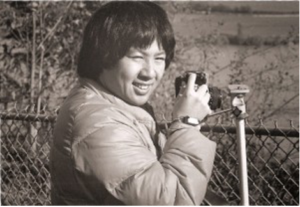
Apply for a 2013 Stanford Chen Internship Fund Grant

The Stanford Chen Internship Fund Grant supports college students needing help to bridge some of the costs that might otherwise keep them from taking an internship and expanding their journalism skills in an internship.

ABOUT THE GRANT

AAJA is now accepting applications for the 2013 Stanford Chen Internship Fund Grant. AAJA will award one or more news internship grant(s) of $1,750, available to current college juniors, seniors and graduate students. The grants are for print, online, broadcast or photography interns at small- to medium-size outlets.

AAJA strongly encourages applications from students who grew up in the Pacific Northwest, are attending college in the region or will intern at media outlets in Washington, Oregon or Idaho.

ELIGIBILITY

  • Applicants must have a serious interest in pursuing a career in journalism.
  • Applicants must have already secured an internship with a print company (daily circulation under 100,000), broadcasting company (markets smaller than the top 50) or online company.
  • The grant is to be used only toward living expenses and transportation during the actual internship.
  • AAJA membership is encouraged for all applicants and required for the selected grant recipient(s).


STEPS FOR APPLYING

Start by clicking on the AAJA log-in page to create your unique profile and establish an account if you don’t already have one. You don’t have to be an AAJA member to set one up, but AAJA membership is encouraged for all applicants and required for the selected grant recipient(s).

1. Go to “Awards and Competitions” on your personal account page,

2. Then “View Open Competitions,”

3. Then ”view” of “2013 Stanford Chen Internship Fund Grant.”

Complete the application requirements by the deadline: March 29, 2013

PRIVACY POLICY

1. Application information will only be used internally by AAJA to promote student opportunities and for program evaluation and planning. In the application form, please indicate whether or not you would like to be notified of further student opportunities from AAJA.

2. AAJA does not share applicant information with third parties.


ABOUT STANFORD CHEN

Stanford Chen was a California-born city boy who was introduced to journalism by working on his high school newspaper at Oakland Tech. After graduating with a journalism degree from Indiana University, Chen’s professional career began at The Bellingham, Wash., Herald. From there he moved to the Daily Journal of Commerce, a business publication in Portland, Ore., as its editor before landing at The Oregonian, Oregon’s largest metropolitan daily. Chen could do anything journalistically, and he frequently was ahead of trends: At The Herald he wrote an environmental column, long before the environment became front-page news; he also was the paper’s sports editor, copy editor and photographer.  At The Oregonian, he started as a part-time copy editor and soon was hired full-time, doing night page makeup. It left his days free to pursue photography, which is when he collaborated with a colleague on Rage Against the Dying Light, a book documenting the life and struggle of gillnetters on the lower Columbia River. Chen later then became deputy editor of the Forum editorial section before returning to his real love, reporting. He remained a reporter even after he was stricken with cancer. He died in 1999 at the age of 51.

HIS VISION AND AAJA SERVICE

Chen helped found the Portland AAJA chapter in 1985, and he spent many hours doing AAJA work, both at local and national levels. Thanks to AAJA, he tapped into a part of himself that none of his full-time jobs were able to fulfill. Newsroom diversity was his particular passion.

Chen was a mentor to countless young journalists during his career, on the job and through AAJA. He befriended many an intern or a new hire at The Oregonian, offering a hearty welcome and sincere words of support. To those of color, he was candid with answers to questions about diversity in the newsroom and city. Chen reached out to student journalists at AAJA’s national conventions, always ready to answer questions or share advice. He lived his beliefs about diversity and helping the next generation of journalists.

Chen was awarded AAJA’s Lifetime Achievement Award at the 1998 Chicago national convention.  Here, in part, is how he was introduced:

“As a longtime newspaper writer, reporter and editor, he’s been a role model, a journalistic lion. His perseverance, achievements and advocacy have stood tall, underscored by a tireless fight for greater diversity in the newsroom and in journalism education. He’s been a tireless supporter of AAJA, performing virtually every function, from stuffing envelopes to serving as AAJA National Vice President for Print. As an instructor and co-director of the reporting program in the Institute for Journalism Education (based at the University of California, Berkeley), and which later became the Maynard Institute, and AAJA’s own Voices, he has helped others learn to become better at the craft that we all practice.  As a voice and conscience in our own industry he’s been an ardent leader in pushing all of us forward. And his book, Counting on Each Other: A History of the Asian American Journalists Association from 1981 to 1996, stands as a testament to his numerous contributions.  As a person, he is simply unmatched.”

Accepting the award, Chen said: “AAJA has been like a family to me. The mission of journalism has helped me and, in turn, I feel the need to give back as much as I can to keep the mission going, keeping diversity alive and making sure the industry” does, too.